
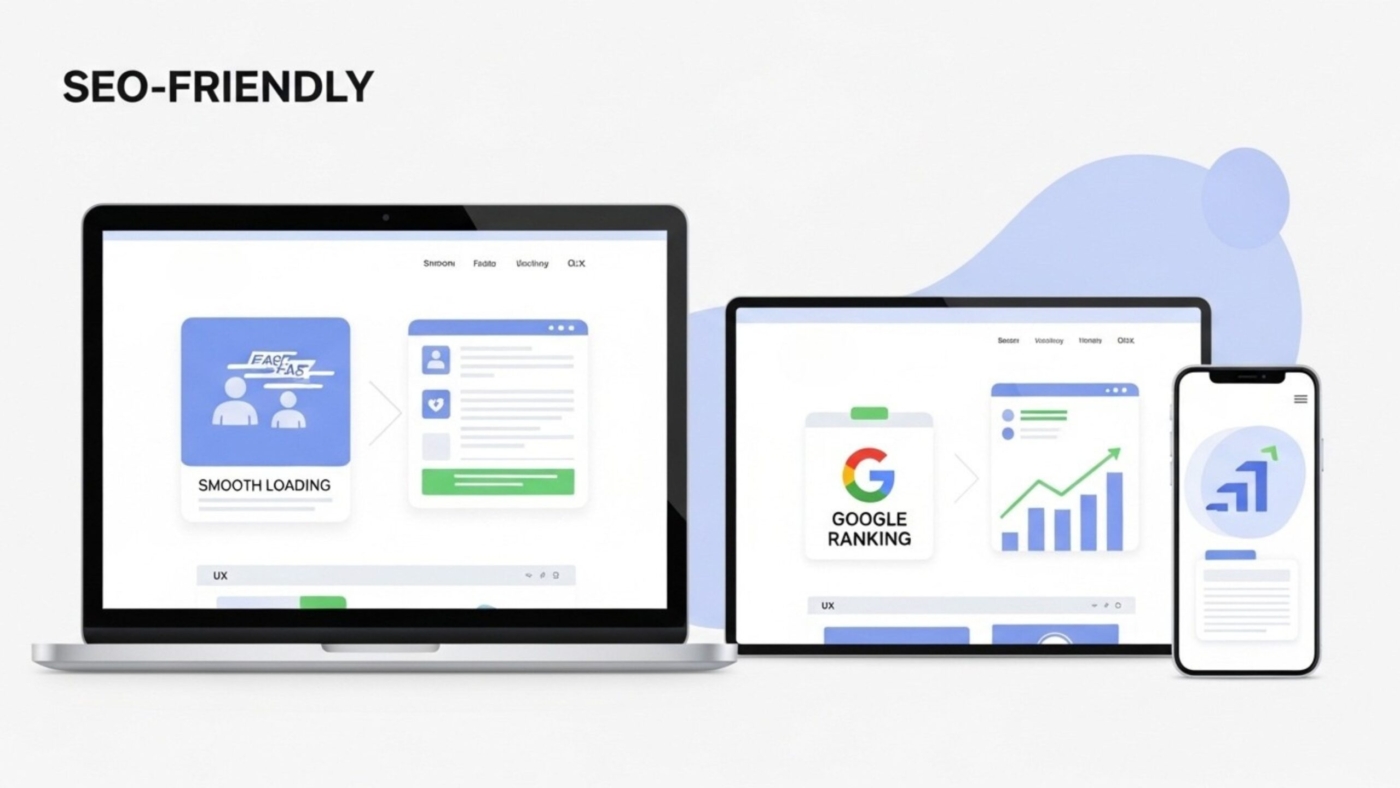
In 2026, website design is no longer just about looks—it plays a major role in SEO and Google rankings. Search engines now prioritize websites that offer excellent user experience (UX). A well-designed, user-friendly website keeps visitors engaged, reduces bounce rates, and improves overall search visibility.
What Is SEO-Friendly Website Design?
SEO-friendly website design focuses on creating a site that is easy for both users and search engines to understand. It combines clean design, fast performance, mobile responsiveness, and structured content to improve rankings and conversions.
Why UX Matters for SEO
Google uses user behavior signals such as page load time, time spent on site, and mobile usability to evaluate website quality. Poor UX can lead to higher bounce rates, which negatively affects rankings. A positive user experience helps search engines understand that your website provides value.
Key Elements of SEO-Friendly Website Design
1. Fast Page Loading Speed
Website speed is a confirmed Google ranking factor. Optimized images, clean code, and reliable hosting improve loading times.
2. Mobile-First Design
With most users browsing on mobile devices, Google prioritizes mobile-friendly websites. Responsive design ensures your site looks great on all screens.
3. Clear Navigation Structure
Simple menus and logical page hierarchy help users find information quickly and allow search engines to crawl your site efficiently.
4. Optimized Content Layout
Using proper headings (H1, H2, H3), readable fonts, and white space improves readability and SEO.
5. Secure and Accessible Website
HTTPS security and accessible design elements improve trust and user experience.
How SEO-Friendly Design Helps Business Growth
An optimized website design improves search rankings, increases engagement, and boosts conversion rates. Businesses with strong UX convert more visitors into leads and customers.
At Linkmedia.in, we design and optimize websites that are visually appealing, SEO-friendly, and built to deliver measurable business results.
Conclusion
SEO and UX go hand in hand. In 2026, businesses that invest in SEO-friendly website design will rank higher on Google, attract more traffic, and achieve sustainable growth.
FAQs
Q1: Does website design affect Google rankings?
Yes, website speed, mobile responsiveness, and user experience directly impact SEO rankings.
Q2: What is the most important UX factor for SEO?
Page speed and mobile usability are among the most critical factors.
Q3: Can redesigning a website improve SEO?
Yes, a well-planned redesign with SEO best practices can significantly improve rankings.
Q4: Why choose Linkmedia.in for website design and SEO?
Linkmedia.in offers SEO-optimized website design focused on performance, UX, and long-term growth.
Add a Comment